Easy read and translate

Spotlighting
- Professionals and Clinicians
- Speech, language and communication

Explore the topics on this page:
Understanding spotlighting
In some areas, up to 50% of children start school without the speech, language and communication (SLC) skills they need to access learning effectively. These children are not yet working at the level expected for their age, but they do not need a referral to Speech and Language Therapy straight away.
Spotlighting is raising staff’s awareness of who these children are and how few interactions from adults they receive. Spotlighting is also the process of planning quality interactions and other support for these children.
Spotlighting is a child‑centred process. It involves staff closely watching a child’s strengths, interests and developmental needs. This helps staff to:
- understand the child’s communication profile
- plan targeted support based on individual need
- keep monitoring to track progress over time
Children who need spotlighting may not have as many high‑quality interactions with adults. Research shows that children with limited language skills often receive fewer interactions. This can widen the gap further. This is why it's important for staff to be aware and plan quality interactions.
Identifying spotlight children
Identification can be supported through:
- screening tools, such as:
- on-entry observations in early years settings and schools
- talking to parents and carers about how the child communicates. This includes any languages spoken at home
- statutory baseline assessments (Reception)
Staff can also use a traffic light system to help decide which children may need spotlighting. These children would typically fall into the yellow or amber categories.
Children who are working at expected levels for communication and language.
Children who are working close to expected levels for communication and language. These children need high quality adult child interactions and monitoring. This helps to ensure they keep making progress.
Children who are not yet at the expected level but do not currently need a Speech and Language Therapy referral. These children need close monitoring and planned quality adult child interactions. Additional strategies to support language development can also help. For example, small-group interventions and targeted parent/carer support.
Children with identified SLCN or SEND or those already undergoing a referral. They have clear support in place.
Tracking spotlight children
It's important for all staff to know which children are being spotlighted. This helps to ensure the right support is offered.
Spider tracking observation
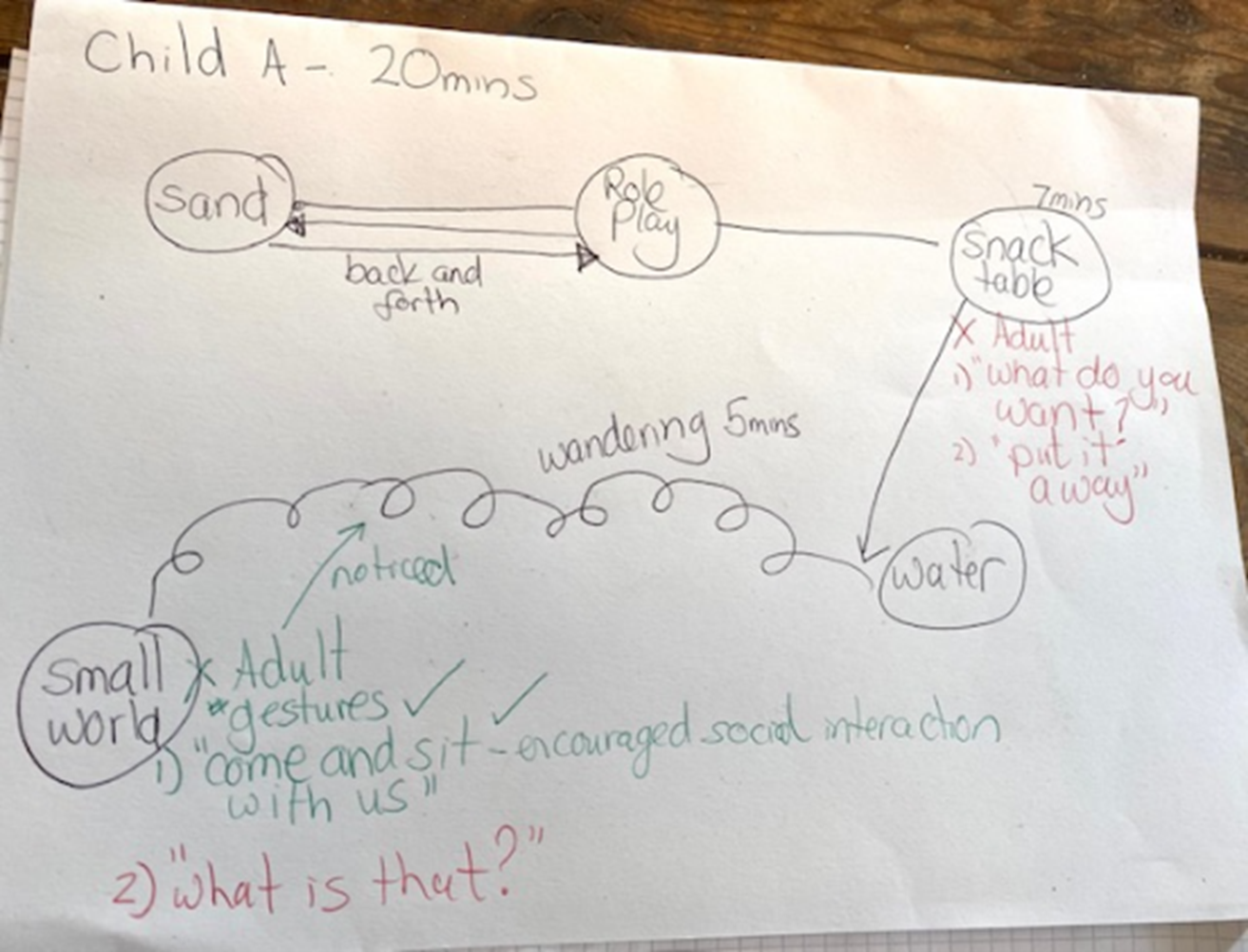
Spider tracking involves observing a target child during continuous provision and recording their movement on a simple diagram of the room. The different activities or areas of the environment are plotted on the diagram. As the child moves around, their pathway is drawn on the plan, creating a “spider‑web” pattern that shows how they use different areas and resources.
Adult interactions are marked with an 'A' on the diagram. Peer interactions are marked with a 'P' to show when and where an interaction takes place. Where appropriate, briefly note the type of interaction observed. This helps to identify patterns in the child’s engagement with the environment, interactions with peers and types and frequency of interactions with adults. It is a useful way of highlighting the need for planning quality adult-child interactions with specific children.
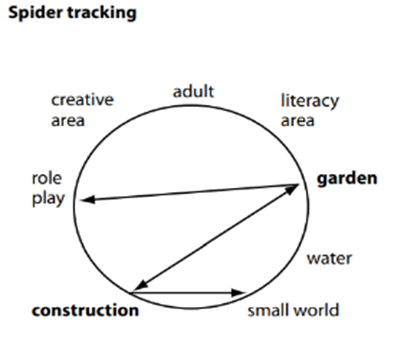
Download the spotlight tracking tool. Or you can use your own tracking method.
Supporting spotlight children
Regular, planned interaction and targeted support, helps spotlight children to make significant progress. It can also help them to “catch up” with peers.
Opportunities for high-quality interactions can be intentionally built into the child's day, with a strong focus on sustained shared thinking. This involves meaningful, back-and-forth conversations where adults and children listen carefully, respond, question, clarify ideas and build on thinking together over time. For example:
- shared book reading with a small group and pausing often to comment, wonder and invite responses: “I can see the bear is hiding… where do you think he might go next?”
- noticing and commenting on what the child sees or does: “You found a long stick!"
- focused questions during problem solving activities: “What do you think will happen if we add more water?”
- joining in playground games: “I noticed your group is making a game, how does it work?”
- using the child’s interests: “You mentioned you like coding, that sounds really exciting!”
Read more about adult-child interaction.
If a child is not making progress, or their progress slows down, they should be reviewed and may need to be referred to Speech and Language Therapy.
Staff can receive training and support for developing adult‑child interaction skills. This may be available through the Early Communication Support Team or local authority education services.
Last reviewed: 7 May, 2026