 Easy read and translate

Environmental adaptations for children with sensory differences

Explore the topics on this page:
Supporting sensory differences
How to spot when changes are needed
Supporting sensory differences
Children who are dysregulated may see the environment around them as a potential threat or danger. If they react in fight, flight or freeze mode, they will focus on keeping themselves safe, rather than the activities they are asked to complete.
You or those who work with your child can make adjustments to their environment, whether at home or in school, to help support their sensory needs. Small adjustments can help your child to cope and function, which can make them feel safer at home and help them to participate and learn at school.
You can support your child by trying multiple strategies at the same time, read helping your child with sensitivities and the planning wheel pages for more information.
How to spot when changes are needed
If you are concerned that your child may be overwhelmed and dysregulated at school, and this is affecting their learning, you can ask the school to conduct a sensory audit.
A sensory audit can help the staff who work with your child to assess and create an environment that helps your child with sensory differences to join in with activities.
While it will not cover all sensory concerns that your child may experience, it can give ideas on the ways that the school or setting can be adapted if children are finding it too hard to tolerate certain sensations or situations.
Find an example of the sensory audit tool below, created by Ian Attfield, Amy Fowler and Val Jones on behalf of the Autism Education Trust.
Safe or sensory spaces
If your child is in fight, flight or freeze mode, a safe space to go to can help them to get away from the sensory experience that is causing them distress. These spaces can look very different depending on whether they are at home, in school or other settings. However the safe space needs to reduce how much sensory stimuli your child experiences and include regulating activities.
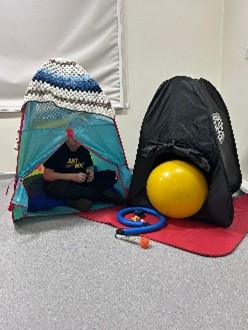
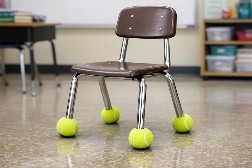
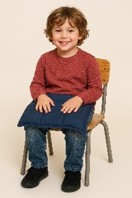 For example:
Reasonable adjustments at school
Talking to your child's teacher about their sensory differences can help them to plan appropriate support in school. Your child's teacher can try different strategies to support your child.
They may consider where your child sits in the class. Are they better:
- Sitting at the front or the back of the classroom?
- Near or away from a window?
- Near the teacher?
- At the end of a row of desks?
- Facing a blank wall?
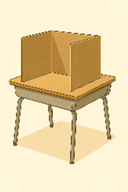
They may feel your child could benefit from a desk partition to help them focus and avoid distractions.
They may be able to adapt the school timings or be more flexible with specific rules for your child. For example:
- leaving a lesson 5 minutes early to avoid crowded corridors
- using a disabled toilet to avoid loud or smelly bathrooms
- having a toilet pass so they can avoid peak busy times
- turning off hand dryers in toilets or toilet areas and provide hand towels
- eating their lunch in a quiet room away from the noises and smells of the main lunch hall or cafeteria
- wearing an adapted school uniform to avoid scratchy fabrics, find more information on strategies for dressing sensitive children
- having movement breaks during lessons
- being given a time-out card to allow them to move away when overwhelmed.
Things to remember
Children's ability to cope with sensory input will vary throughout the day and week. Their experiences over the weekend or when getting ready for school in the morning can lead them to be more sensitive to sensory input at school. For example:
- having a bad night's sleep
- being unable to wear their favourite t-shirt
- needing to wear a stiff, scratchy school uniform
- taking a different route to school because of roadworks
Children who have sensory differences may get tired more quickly because of the extra energy they use to try to regulate themselves and cope with sensory demands. Being in fight, flight or freeze mode for long periods of time can also be very tiring.
Many children mask their differences at school, which means they may appear different to how they act in the safety of their home. The energy it takes to suppress how they are feeling to appear 'ok' at school can result in them being withdrawn, emotional, difficult or aggressive when they leave school and return home.
Speaking to your child's school can help them to understand how your child behaves in different environments, so that they can adjust the strategies and support they are using with them.
