 Easy read and translate

Autism diagnostic observation schedule (ADOS) assessment
- SEND
- Neurodiversity
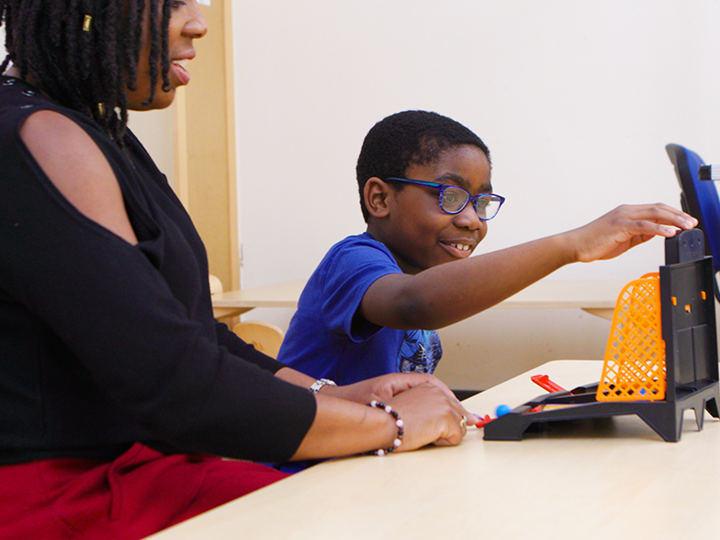
The autism diagnostic observation schedule assessment is also known as the ADOS assessment. It is a tool used to help clinicians assess autism. It uses play and conversation to get information from your child or young person.
Using the ADOS assessment we will be looking at your child or young person's:
- communication skills
- social skills
- play skills
- repetitive behaviours
- restricted behaviours
Clinicians cannot diagnose autism only using the ADOS assessment. It is used alongside other tools like observations or assessments from professionals. It is a snapshot of your child or young person's communication skills. It may not show the whole range of their strengths and difficulties.
Explore the topics on this page:
What to bring to the appointment
What to bring to the appointment
We will provide the toys and games for the assessment. You might want to bring some things from home to keep your child or young person entertained whilst they wait for the appointment.
You could bring:
- Toys and books keep them entertained as they wait
- Snacks if you think they might get hungry

Face masks and face coverings
During the assessment, we request that you and your child or young person do not wear masks or face covering. The clinician will not be wearing a face mask, your child or young person will need to see the clinician's face. The assessment will be invalid if a face mask or face covering is worn.
Who can come along to the appointment?
ONLY one adult is required to come along to the appointment with their child. They may accompany their child into the assessment or request a chaperone.
Please note that chaperones are not available for weekend appointments. If you have selected a weekend appointment and require a chaperone, please call 0300 555 0606 to rebook.
Please do not bring any other children or family members to your appointment.
What will happen during the appointment?
A clinician will greet you and bring you and your child or young person into the clinic room. The ADOS assessment will be video-recorded, so you will be asked for written consent to allow the clinician to record the assessment on the day of the appointment. This is so they can refer to it in the future. This video recording will be used for assessment purposes only and will be handled and stored securely in the same way we handle all clinical records.
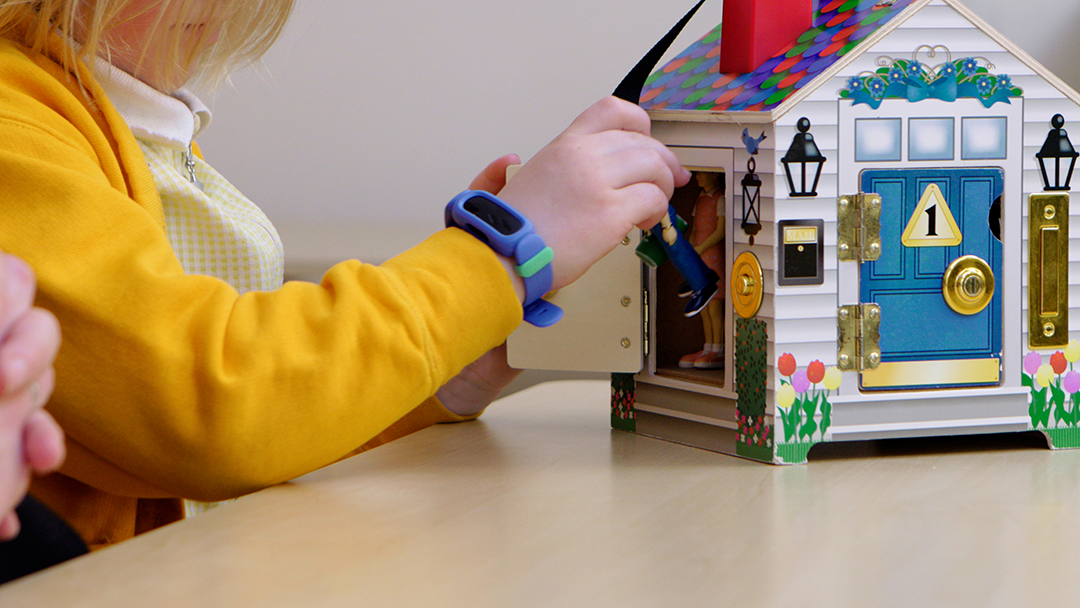
The ADOS assessment focuses on playing and having a conversation. During the assessment, your child or young person will be given the opportunity to do some activities and play games. These include:
- making a story with objects
- playing with toys
- puzzles
- talking about pictures in a book
The games are chosen for your child or young person based on their age and their language skills.
If your child is under 5 years old, you may be asked to sit in the clinic room during the assessment. During the assessment, please only respond if your child approaches you. Please do not join in or give your child any instructions. This is to make sure we have an accurate and reliable assessment.
If your child is over 5 years old, you may be asked to sit outside the clinic room during the assessment. This will only be if your child or young person is comfortable with this.
It is completely okay if your child does not want to play or engage in activities. Whatever your child does on the day will help us to understand them.
Last reviewed: 27 November, 2024
